How to Buy Land Online Without Costly Mistakes

DoorEast | Jun 8, 2026

7 min read

General

A land listing can look perfect on your phone and still be wrong for your plans. The photos may be attractive, the price may look competitive, and the location pin may seem close enough to everything that matters. But land is less forgiving than a finished home. If you are learning how to buy land online, the goal is not just to find a parcel. It is to verify that what you see on screen matches what you can legally, financially, and practically use.

That is why the smartest buyers treat online land search as both a discovery tool and a verification process. Digital platforms make it easier to compare parcels, narrow by area, and contact agents faster. They also make it easier to move too quickly. The difference comes down to how you evaluate the listing before you commit.

How to buy land online with a clear plan

Start with the use case, not the listing. Some buyers want land to build a primary home. Others are buying for a second residence, a future development, agriculture, or long-term investment. Each goal changes what matters. A parcel that works well for a warehouse may be useless for residential construction. A scenic lot may carry restrictions that limit what you can build.

Before browsing, define your non-negotiables. Set a target area, a realistic budget, acceptable lot size, and your intended use. Also decide how much flexibility you have on road access, slope, utilities, and distance from schools, work, or commercial centers. This part sounds basic, but it prevents the most common online buying mistake: comparing land by price alone.

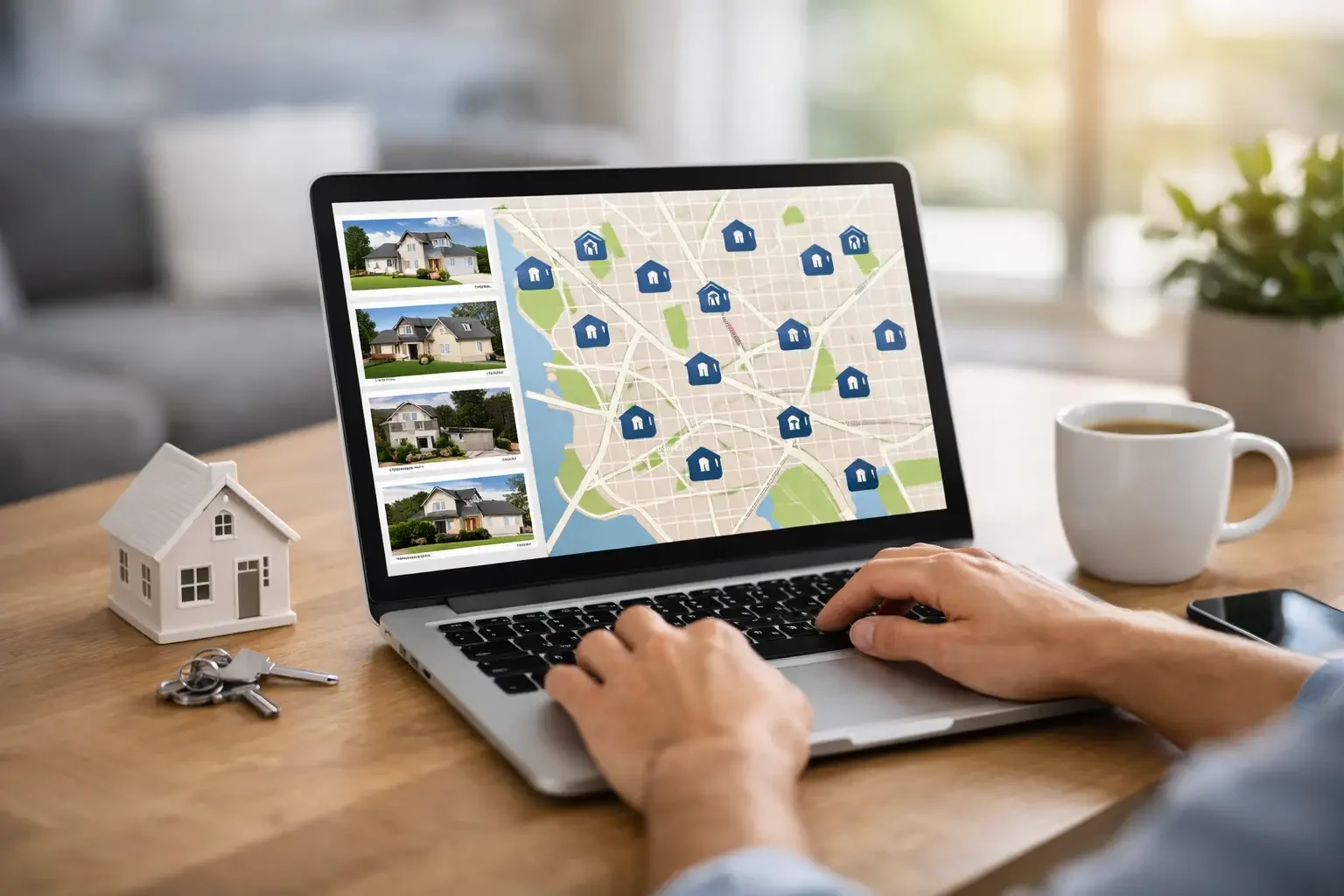
A good platform helps you search with more precision. Map-based browsing is especially useful because land value is deeply tied to context. Boundaries, nearby roads, neighboring properties, and elevation can change a deal completely. The more visual and location-driven the search experience, the better your first filter will be.

Read the listing like a buyer, not a browser

Online land listings should do more than announce that a parcel exists. They should help you assess whether it deserves further attention. That means looking beyond headline details.

Start with the obvious fields: lot size, price, location, and listing status. Then go deeper. Is the zoning stated clearly? Does the listing mention access to electricity, water, sewage, or road frontage? Are there parcel maps, survey references, or boundary images? Does the description explain whether the land is flat, sloped, subdivided, or part of a larger tract?

If key information is missing, treat that as a signal rather than a small inconvenience. Missing details do not always mean the property is a bad opportunity, but they do mean more verification is required. Serious buyers should expect enough information to move from curiosity to due diligence.

Photos matter too, but only when read correctly. Beautiful drone shots can hide access problems, surrounding construction, or terrain issues. A pin on a map can also be approximate. If the listing does not clearly show the parcel boundaries or the exact location, ask for supporting documentation before moving forward.

Questions to ask before you contact the seller or agent

The fastest way to filter land listings is to ask a short set of practical questions. Is the title clear and transferable? What is the exact zoning classification? Are there building restrictions or setback requirements? Is there direct legal access to the parcel? Are utilities available nearby, and who pays for connection? Has a recent survey been completed?

These are not advanced questions. They are the minimum threshold for serious interest.

Verify what the land allows, not just what it offers

This is where many online buyers get caught. They buy based on appearance and location, then discover that the parcel cannot support their intended use. Land should be evaluated through permissions as much as features.

Zoning is the first checkpoint. You need to know whether the land is residential, commercial, agricultural, industrial, or mixed use, and whether local regulations allow the type of project you have in mind. Beyond zoning, there may be density limits, height rules, road setback requirements, environmental constraints, or subdivision restrictions.

Topography matters just as much. A parcel may be technically buildable but expensive to develop because of slope, drainage, retaining needs, or soil conditions. Access matters too. A lot that looks close to a main road may still have complicated legal or physical access issues.

If you are buying in a market where regulations, permits, and title procedures can vary by area, it makes even more sense to work through trusted professionals and organized listing platforms. In Lebanon, for example, local knowledge often changes the quality of the decision as much as the property itself.

How to buy land online without skipping due diligence

Online convenience should speed up research, not replace due diligence. Once a parcel looks promising, move into document review.

At a minimum, ask to review title documents, cadastral references, survey plans if available, zoning details, and any records related to easements or rights of way. If the property is being sold as part of an inheritance, through multiple owners, or from a larger unsegmented tract, the paperwork may require extra care. Land deals often become complicated not because the parcel is undesirable, but because ownership and legal boundaries are not fully documented.

This is also the stage to confirm whether there are unpaid taxes, legal disputes, liens, or claims attached to the property. If financing is involved, make sure the timeline for approvals aligns with the seller's expectations. Cash buyers move faster, but they should not move blindly.

A platform like DoorEast can make the front end of this process easier by centralizing listings, helping buyers compare options, and creating a cleaner line of communication with agents. But the transaction still depends on verification, professional review, and disciplined decision-making.

Why an on-site visit still matters

Even if you plan to buy through a digital-first process, land should usually be visited before final commitment. Homes can be understood through layouts, videos, and virtual tours. Land is different. You need to experience the road approach, surrounding activity, slope, neighboring structures, and real-world feel of the area.

An on-site visit can reveal noise, poor access, unmarked boundaries, or terrain challenges that no listing fully captures. If you are abroad or cannot visit quickly, use a trusted local representative, agent, or survey professional to inspect it for you.

Compare value, not just asking price

Cheaper land is not always cheaper in practice. A lower asking price may hide higher development costs, legal issues, weak resale potential, or infrastructure gaps. More expensive land may actually be the stronger buy if it offers clear title, better access, stronger surrounding demand, and fewer barriers to development.

When comparing listings online, look at the total cost picture. That includes purchase price, legal fees, registration costs, surveying, site preparation, utility connection, and the time required to make the parcel usable. Time has a cost too. A parcel tied up in unclear paperwork can become more expensive than one priced higher but ready to transact.

Market context matters here. If similar lots in the same area are priced far apart, find out why. The difference may reflect zoning, frontage, topography, title quality, or seller urgency. Price per square foot can be useful, but only after you confirm that the parcels are actually comparable.

Know when to walk away

One of the biggest advantages of buying land online is access to more inventory. That only becomes a real advantage if you are willing to move on from weak listings.

Walk away when the seller cannot provide basic documentation, when the location shown online does not match reality, when ownership is unclear, or when the intended use depends on assumptions rather than confirmed rules. Also be cautious when a deal is rushed with pressure around deposits or timelines before due diligence is complete.

Good land opportunities hold up under scrutiny. If a listing falls apart when you ask normal questions, that is not friction. That is useful information.

The best online land buyers are not the fastest clickers. They are the clearest thinkers. Search widely, compare carefully, verify everything, and let the quality of the parcel, the paperwork, and the location make the decision for you. A smart land purchase should still feel right after the screen is off.

Related Articles

Can Foreigners Buy Property in Lebanon?

8 min read

Published: Jun 14, 2026

How to Rent Commercial Space Without Mistakes

8 min read

Published: Jun 12, 2026

Renting Versus Buying Property: Which Fits?

7 min read

Published: Jun 10, 2026